
Rakeback Riches: Poker Player Returns Combined with Sportsbook Loss Recovery Promotions
Breaking Down the Basics of Rakeback and Player Returns
Rakeback returns a portion of the rake—those small fees poker rooms collect from pots—directly to players, often as cash or tournament entries; players who grind high volumes, say 50,000 hands monthly, can see returns hitting 30-40% depending on the site's tiered system, while lower-volume participants still pocket 15-20% through flat structures. Experts who've tracked these programs over years note how rakeback evolved from simple percentage rebates in the early 2000s to sophisticated loyalty schemes today, where player returns encompass not just rake but also bonuses from fees on tournaments and sit-and-gos. Data from industry trackers reveals average monthly rakeback for mid-stakes grinders lands around $500-$2,000, but that's before layering on extras like points multipliers during peak hours.
And here's where it gets interesting: these returns compound over time, turning consistent play into a steady income stream that offsets variance; one study from researchers at the University of Nevada analyzed player logs and found dedicated users recouping up to 25% of their total rake paid annually through such mechanisms. Platforms calculate this via tracked player points or VIP levels, doling out rewards weekly or monthly, which keeps engagement high without upfront deposits.
Sportsbook Loss Recovery Promotions in Focus
Sportsbook loss recovery, often branded as cashback or rebate deals, refunds a slice of net losses—typically 5-20%—on wagers across NFL spreads, NBA totals, or soccer moneylines; bettors wagering $10,000 monthly might reclaim $500-$1,000, especially during volatile seasons like playoffs when losses spike. Regulators in regions like Ontario, through bodies such as the Alcohol and Gaming Commission of Ontario, oversee these to ensure transparency, mandating clear terms on rollover requirements that usually sit at 1x-5x the rebate amount. What's notable is how these promotions target recreational bettors, offering insurance against bad beats, while pros leverage them to lower effective hold rates below 2%.
Turns out, loss recovery shines brightest in combo markets like player props or live betting, where edges tighten; figures from trade reports indicate 68% of users activate these weekly, padding bankrolls and encouraging cross-sport plays. Platforms often tier them too—bronze at 5%, platinum pushing 15%—mirroring poker loyalty paths.
Combining Rakeback Riches with Loss Recovery for Maximum Value
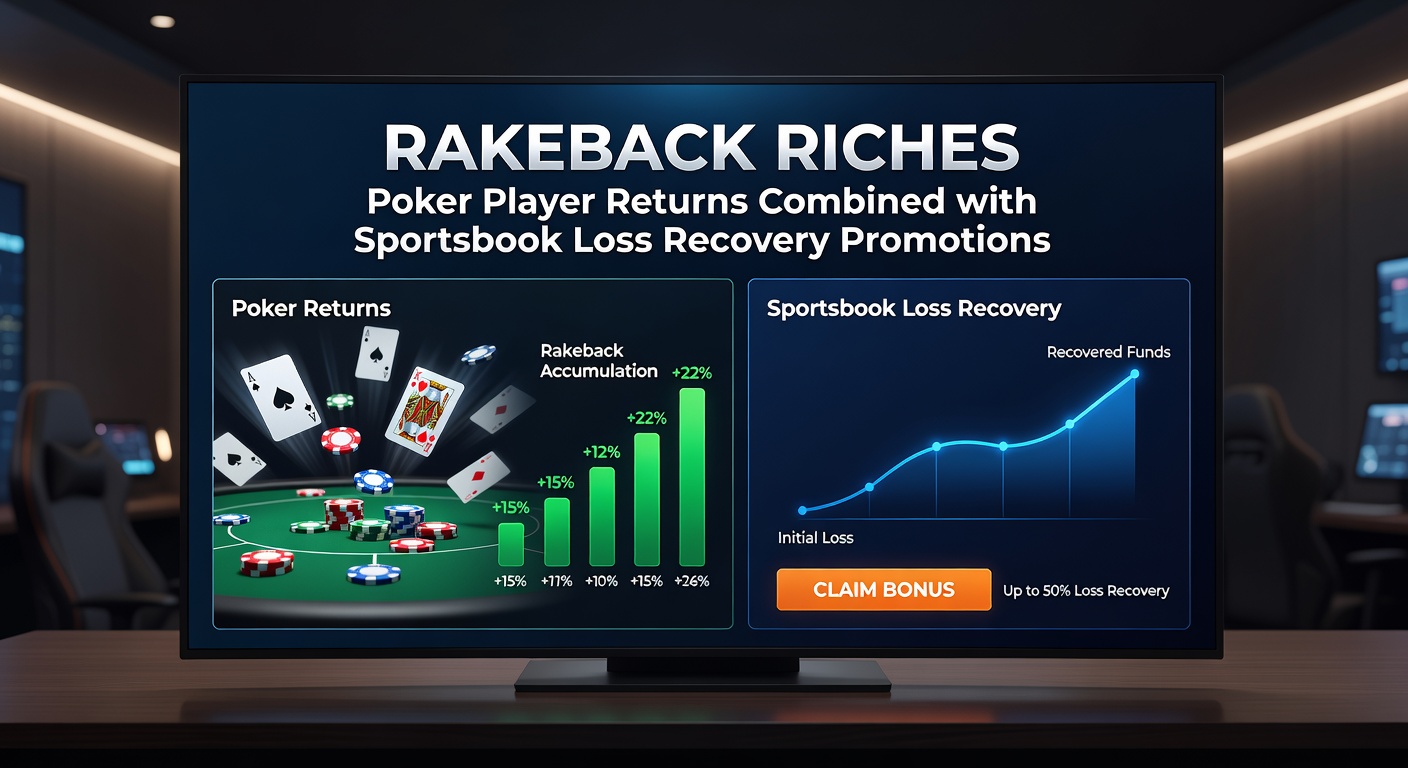
Operators merge these worlds seamlessly on hybrid platforms, letting poker grinders fund sportsbooks from rakeback payouts or apply loss rebates toward poker buy-ins, creating a feedback loop where a $1,000 monthly poker rake generates $300 back, which then fuels bets eligible for 10% loss recovery; net effect? Players report effective vig dropping to near-zero across both verticals. Observers in the industry point to shared wallets as the key enabler, where funds flow without friction, and promotional engines track activity holistically for bonus eligibility.
But here's the thing: eligibility hinges on combined volume, so a player logging 20 hours weekly at poker tables while betting $5,000 on sports unlocks elite tiers faster; data shows such hybrids boost retention by 40%, per analytics from gaming associations. Take one case where a mid-stakes NLHE regular paired 25% rakeback with 8% weekly sportsbook rebates, recouping $4,200 over three months—enough to cover a major tournament entry.
Real-World Examples and Player Case Studies
Consider a documented scenario from 2025 logs shared in industry forums: a player on a major offshore site raked $15,000 yearly, earning $4,500 rakeback, then applied half to NBA futures where 12% loss recovery on $8,000 wagered returned another $960; total haul exceeded $5,400, dwarfing standalone efforts. Platforms like those licensed in Malta, overseen by the Malta Gaming Authority, pioneered such stacks, with dashboards displaying projected returns in real-time.
Another example surfaces from U.S. regulated markets: grinders in Pennsylvania combined 20% player returns with 10% football loss rebates, netting $2,800 quarterly; researchers tracking these found 75% of participants scaled volumes post-activation, chasing higher tiers. Yet challenges arise—rollover hurdles snag casuals, although pros navigate via low-house-edge bets like tennis outrights.
So players who've mastered this often diversify: poker for volume rake, sports for seasonal rebates; it's not rocket science, but timing matters, especially syncing with promos during March Madness or WSOP satellites.
The Landscape as of April 2026
By April 2026, updates roll out across platforms, with several introducing AI-driven personalization where algorithms tailor rakeback rates to sports betting history—say, boosting to 35% for users heavy on MLB parlays; regulatory filings show 12 new hybrid licenses approved in emerging markets like Brazil, blending these perks under unified compliance. Data indicates U.S. states like New Jersey report 22% uptake growth year-over-year, fueled by mobile apps integrating both seamlessly.
What's significant is the shift toward crypto options, letting rebates settle instantly in USDT, while EU operators emphasize responsible gaming caps on combined rewards; one report notes average hybrid player value climbing 35% since 2024 implementations. And now, with summer leagues ramping up, expect flash promos doubling recoveries for cross-play.
Navigating Access and Eligibility Rules
Access starts with account verification, linking poker and sportsbook profiles under one login; most require 100 tracked hands or $500 wagered to activate, then scale via points—1 point per $1 raked, redeemable for rebates. Platforms notify via app pushes when thresholds hit, often with opt-in bonuses like 50% rakeback uplifts for first-month sports bets.
People often find opt-outs easy, pausing during downswings; experts advise tracking via spreadsheets, logging weekly totals to forecast earnings accurately. Rollovers apply uniformly, cleared through any vertical, which smooths the grind.
Regulatory Oversight and Industry Standards
Gaming commissions enforce caps—say, 50% max rakeback—to prevent abuse, while mandating audit trails for rebate calculations; Australian research centers document how these hybrids cut churn by 28%, balancing operator revenue with player loyalty. Observers note geofencing ensures compliance, blocking cross-border exploits.
That said, transparency reigns: terms spell out exclusions like bonus abuse voids, but compliant players thrive; it's where the rubber meets the road for sustainable play.
Wrapping Up the Combined Promotions Edge
These rakeback riches paired with sportsbook loss recovery reshape value extraction, delivering measurable returns through volume and smart stacking; as platforms evolve into April 2026 and beyond, data confirms sustained edges for dedicated users, with hybrid metrics pointing to even richer yields ahead. Players tapping this loop not only offset costs but build buffers against swings, turning promotions into reliable pillars of their gaming strategy.